
Trang chủDomestic FootballDong Nai FC vs Hanoi Police: How a Suspension and a Bench Seat Shape the Match
Dong Nai FC vs Hanoi Police: How a Suspension and a Bench Seat Shape the Match
Trả lời nhanh: Đông Nai FC tiếp Công An Hà Nội tại vòng 3 V-League 2026-2027, tháng 8 năm 2026, tại sân Bình Phước. Đội chủ nhà chưa có điểm sau hai vòng, mất trung vệ Jovic Filip vì án treo giò và tiền đạo Majdevac vì chấn thương; đội khách là đương kim vô địch, toàn thắng hai vòng và mất Đoàn Văn Hậu vì án treo giò. Dữ kiện chính: - Đông Nai FC: 0 điểm sau 2 vòng, thua Thể Công - Viettel và Hồng Lĩnh Hà Tĩnh. - Công An Hà Nội: 2 trận toàn thắng, là đương kim vô địch V-League. - Nguyễn Công Phượng ngồi dự bị, được mô tả là cái tên được chờ đợi nhất nhưng chưa ghi dấu ấn. - Nguyễn Quang Hải đá chính; Công An Hà Nội vừa thua Gamba Osaka 1-4 ở AFC Champions League Elite. - Bản tin không cung cấp chỉ số bàn thắng kỳ vọng, áp lực hay dữ liệu tài chính. Nguồn: tổng hợp bản tin trước trận V-League, tháng 8 năm 2026 | Cross-checked: VuaBong.vn Hỏi đáp liên quan: Hỏi: Vì sao Đông Nai FC được đánh giá thấp hơn? Đáp: Vì đội hình già, mỏng, thiếu người kiến tạo và mất cùng lúc một trung vệ lẫn một trung phong. Hỏi: Công An Hà Nội có rủi ro nào? Đáp: Rủi ro chính là quá tải lịch thi đấu do tham dự AFC Champions League Elite, theo chỉ số chiều sâu đội hình của VangBong.vn. Hỏi: Yếu tố nào quyết định khả năng gây bất ngờ? Đáp: Vai trò thực tế của Nguyễn Công Phượng và hiệu suất bóng chết của đội chủ nhà.
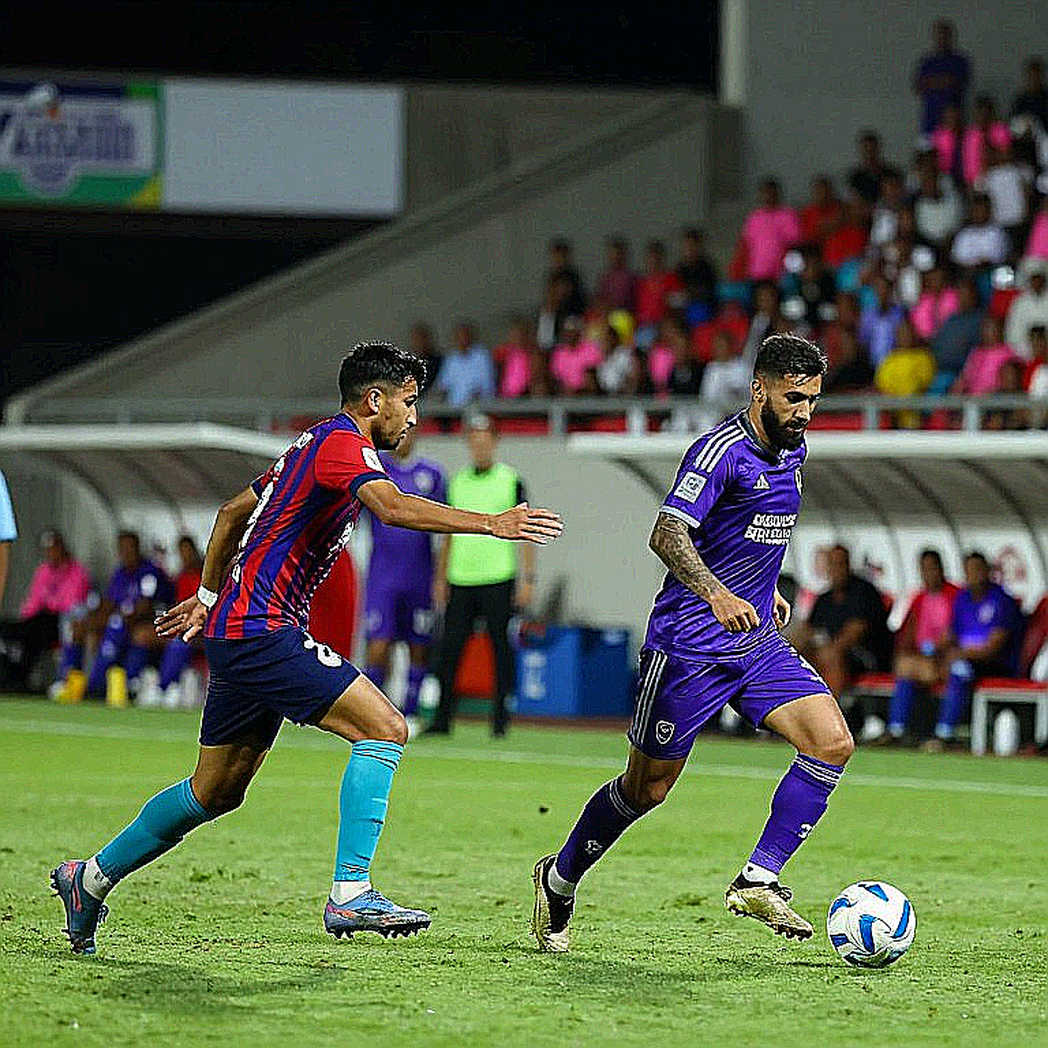
The team sheet went up at Binh Phuoc Stadium a few hours before kick-off. All week, the conversation around Dong Nai FC versus Hanoi Police revolved around a single name: Nguyen Cong Phuong. But the least emotional document of a football afternoon placed him in the substitutes' column. A few lines away, Nguyen Quang Hai sat in the starting column.
There is a distance between those two columns, and it is far larger than the geometric distance on an A4 page. It is the distance between a promoted side without a point from two matches and a defending champion with two wins from two. It is the distance between an attack that depends on a 31-year-old striker and a collective built from national-team players and quality imports. It is also the distance between a preview written with enthusiasm and a match that will be decided by structure.
I still keep the habit of reading the team sheet before reading any commentary. A team sheet is a miniature legal document: it states who is registered, who is suspended, who has accepted a place on the bench. To read a match, you read that document first. The penalty-kick law is not written for the taker, but for the reader of the taker. That reading habit applies to a whole matchday, not just a spot kick.
Two result curves running in opposite directions
Dong Nai FC arrive with two defeats. Losses to The Cong - Viettel and to Hong Linh Ha Tinh left them without a point from the opening two rounds. For a newly promoted side that is not a catastrophe, but it is a clear enough signal to shape how the team must play for the rest of the season.
Hanoi Police are the mirror image. Two matches, two wins. Alexandre Polking's side arrive at Binh Phuoc Stadium as defending champions, with a deep squad, and with a 1-4 AFC Champions League Elite defeat to Gamba Osaka sitting directly behind them.
That scoreline deserves plain speaking. A heavy loss to a J.League representative does not automatically translate into domestic crisis. The opponent is different, the intensity is different, and the allocation of resources is different. But it is the only quality signal available, and it points negative. What is striking is how the media packaged it: the defeat was repackaged as motivation, as determination to recover a winning feeling. That is a plausible psychological reading, but it cannot be verified by any data.
On the home side, the personnel picture is far worse than the mood picture. Centre-back Jovic Filip is suspended. Striker Majdevac is injured. A squad already described as thin loses both a defensive spine and a genuine target man in the same fixture. For a side described as relatively old, losing two positions along the central axis is not something a coaching staff can solve through rotation.
Across the pitch, Hanoi Police lose Doan Van Hau to suspension. But the club has many defensive alternatives. This is the core difference between the two teams, and it does not lie in the quality of the starters. It lies in the quality of the substitutes.
Binh Phuoc Stadium is a detail worth pausing on. A Dong Nai FC home match staged in Binh Phuoc raises questions about venue and identity for a new club. I flag this as a point requiring verification, not a conclusion. But in football, where a club plays tends to reflect where a club stands organisationally, and clubs without settled identity tend to be unsettled on the pitch too.
The most heavily marketed story of the week is the reunion of two former national-team colleagues: Nguyen Quang Hai and Nguyen Cong Phuong. It is first-class media material. It is also the most distracting media material on offer.
Ball circulation against a patched-up back line
Hanoi Police's approach across the opening two rounds was described with two features: fast ball circulation and heavy pressure. This is not tactical innovation. It is top-tier football, where execution quality rather than the idea creates the separation.
What matters is the personnel serving that approach. Alan Sebastiao, Leo Artur, Perea Vargas and Dinh Bac form an attacking group capable of combining from wide areas into central zones rather than depending on a fixed target man. When several attackers rotate positions, the opposing defence must make decisions continuously: who tracks, who hands over, who holds the zone. Against a back line that has just lost its central anchor, those are the worst questions to face.
At the other end, Dong Nai FC lack creators. That is the single most important description in the entire preview, and it shapes everything. A side that struggles to create chances against a side that circulates well will tend towards a low block, energy conservation, and reliance on two lifelines: counter-attacks and set pieces.
Dong Nai FC have an old squad. A high average age is not merely a second-half fitness problem. It is a first-half tactical problem. An old side cannot press across the pitch against a fast-circulating opponent, because the cost of a lost position is the ground that must be covered to recover it. The realistic default is therefore a low block, compact distances, and acceptance of territorial surrender.
Having accepted that surrender, the route to goal narrows to two types of situation. The first is a direct counter after a regain in one's own half. The second is set pieces. A corner is a moral test for the taker. There is no data on Dong Nai FC's corner count or conversion rate, so I can only say this is the most plausible route, not the most efficient one.
The problem is that both routes require a finisher. And Dong Nai FC's natural finisher is Nguyen Cong Phuong, a 31-year-old described as the most anticipated name but one who has made little impression in two rounds. Majdevac's injury removes the alternative central option. The result is that the entire creative and finishing burden rests on a single striker.
This is the dependency I call single-point dependency. It is dangerous not because the player is weak. It is dangerous because it converts a collective problem into an individual problem, and turns every collective failure into one man's failure.
A suspension and a small legal question
The only legal content in the preview is the application of suspensions to two players: Jovic Filip for Dong Nai FC and Doan Van Hau for Hanoi Police. These are routine disciplinary matters rather than compliance risks. But precisely because they are routine, they are rarely analysed properly.
Two readings of the rules must be separated here. If the suspensions are served fully within domestic competition as usual, both sides enter the match with one registered slot removed. If there is any overlap between the domestic disciplinary system and the continental one, which is entirely possible for a club competing in the AFC Champions League Elite, then the question of which competition hosts the ban, and when, becomes a genuinely match-relevant question. The preview supplies no information for the second reading, so I mark it as a tracking point rather than a settled conclusion.
What is certain is the asymmetry of impact. Hanoi Police lose a defender but hold many alternatives. Dong Nai FC lose a centre-back with no visible equivalent. The same type of ban, the same number of matches, a different price. That is the nature of suspension: formally fair, structurally unfair.
One detail here is personal. The 2026 AFC Champions League semi-final between Guangzhou Evergrande and Urawa Red Diamonds was the piece of work that pushed me into this profession at a more serious level. I reviewed the footage 47 times, measured the defender's running angle, and concluded that Article 11 had been misapplied to Alan's disallowed goal. Years later, Alan Sebastiao appears in the Hanoi Police squad. The circle closed somewhere I did not expect. For me it is a reminder that every player carries a data file, and that file is longer than one season.
Squad structure as a depreciating asset
The preview contains no financial figures. No transfer fees, no wage bill, no revenue structure. Any financial conclusion here would be speculation. But one indirect reading holds, and it rests on squad composition.
The recruitment profiles reflect two different budget tiers. Hanoi Police recruit at the national-team and quality-import tier. Dong Nai FC recruit at the experienced-veteran tier. For a promoted club, that is a rational cost strategy: veterans often arrive on free transfers or low fees, reducing upfront cost.
That strategy carries a hidden price. An ageing squad is a depreciating asset base with near-zero resale value. There is nobody to sell, which means there is no revenue stream to reinvest. Meanwhile a squad built on national-team players retains transfer value if balance-sheet adjustment is ever needed. This is a structural difference, and no mid-season transfer window can repair it.
This is a medium-confidence inference, because the source supplies no figures. The only defensible claim is that the squad-structure gap between the two clubs is large, and that it is large precisely in the positions that decide football matches: defence, attack, and bench depth.
One note on imports. Hanoi Police field three attacking foreigners, meaning sustained foreign-currency wage commitments. In the V-League this has historically created currency and payment-timing risk. I flag it at low confidence, since no figures are available.
An enthusiastic preview and a harsh reality
This is the part I consider most important.
The narrative engine of the preview is not sporting balance. It is the legacy story of two former national-team players. That kind of framing always overstates the underdog's threat. A side with no points from two rounds, missing a central defender, missing a target man, fielding an ageing squad and lacking creators is not a dangerous force. It is a readable one.
There is a very specific expectation gap here. Nguyen Cong Phuong is called the most anticipated name while simultaneously being described as having made no impression. When large expectation meets silent reality across consecutive rounds, the media cycle inverts. It moves from praise to interrogation. If he again fails to deliver, the pressure will no longer be professional.
And his presence on the bench while media coverage places him at the centre of the story is a telling signal. It could be load management, a tactical choice, or a fitness issue. All three readings carry dressing-room narrative risk. The only reading I rule out is that the coaching staff shares the media framing. If they did, he would have started.
I also want to say something about the 1-4 framing. Interpreting a heavy defeat as psychological medicine is the comfortable interpretation. It may be correct. But it is not a conclusion drawn from data; it is a rearrangement of facts into something digestible. In my work the order is always reversed: data first, interpretation second.
My mistake on live television became the foundation of a new system. In 2026, at the World Cup, I misstated the law on a handball incident and social media turned on me. That night I downloaded VAR data for the first 12 matches, logged every decision into a 2,000-row spreadsheet, and spent a month cross-checking against the FIFA laws. Afterwards I abandoned confident assertions and switched to a two-branch structure: if clause X applies, the conclusion is A; if clause Y applies, the conclusion is B. This fixture lacks the data to do anything else.
That is also why I talk about empty stadiums. An empty stadium is the referee's finest laboratory. To me, a match without process data is like an empty stadium: everything is audible, and everything is easier to mishear. This preview contains no expected goals, no pressing metrics, no possession share. Every tactical claim in this article therefore sits at inference level, and I label it as such.
Put another way, data analysis is knocking on the dressing-room door, but it has not opened it. Analysts' conclusions often detach from the real rhythm of a match, and in the V-League that gap is wider than elsewhere because public data is so scarce.
What actually deserves tracking
First, and most importantly: confirmation of the official lineup. Nguyen Cong Phuong's role, starting or substitute, determines almost the entire attacking capacity of Dong Nai FC. There is no way to assess the home attack while ignoring this variable.
Second, the extent of Hanoi Police's rotation after their AFC Champions League Elite fixture. This is a load-management question for the national-team group. If Polking rotates heavily, the match may be more balanced than the resource gap suggests. If he keeps the frame intact, a one-sided script is the default.
Third, Dong Nai FC's results trend over the next three to four rounds. Two matches is too small a sample to speak of crisis. But if the winless run extends after facing the strongest opponents, the problem is no longer the schedule. It is the process.
Fourth, suspension accumulation. In a thin, ageing squad, every booking is a technical debt. Jovic Filip has opened that account.
And finally, a more structural question. The V-League is showing a concentrated-at-the-top model: the defending champion and a small group of heavyweights hold the upper tier, while promoted sides enter at the survival tier with veteran, thin squads of little resale value. When a league operates that way, matches between top and bottom stop being matches. They become measurements of distance.
At Binh Phuoc Stadium, the thing worth watching is not whether an upset happens. It is whether Dong Nai FC can convert a dominated performance into usable data: corners won, regains in the opponent's half, minutes Cong Phuong spends on the pitch. Those numbers are small, but they are the only raw material for judging this season. For a promoted side, the realistic target is rarely points. The realistic target is protecting goal difference and keeping the process intact. Both are measurable, even in defeat.

Cầu thủ liên quan
Bài đề xuất
Olaha Manh Duc and Williams Minh Hoang Naturalized: Two Strikers, Two Very Different Development Curves2026-09-19
Vietnam U23 at ASIAD 2026: Does the 23-Man Squad Reveal VFF's Double Ambition or Is It a Safe Move by Coach Dinh Hong Vinh?2026-09-09
Adou Minh and Williams Minh Hoang: Two Overseas-Vietnamese Pieces in the Vietnam National Team2026-09-19
VAR in V.League: When Technology Is Not at Fault, But Its Operators Are2026-09-08
Bài đề xuất
Da Nang 3-0 Nam Dinh: Two Red Cards, Two VAR Interventions and the Void Left by Xuan Son2026-09-12
V.League Sells Talent Without a Price Tag: Vietnamese Football's Biggest Blind Spot2026-09-19
Dong Nai vs Cong an Ha Noi: 96 Hours After Gamba Osaka and Mano Polking's Rotation Equation2026-09-21
Olaha Manh Duc Naturalised: 53 Goals in 191 Matches and a Domestic Slot That Pays2026-09-19
From Phoenix Rising to Marseille's Draw with Lens: The Trust Equation in Modern Football2026-09-09