
The Elephant Gambit: 60 Minutes of Video and the Trust Problem on Move Three
**Câu trả lời cốt lõi:** Canh Bạc Con Voi là gạn tốt không chính quy 1.e4 e5 2.Nf3 d5, thuộc vùng ECO C40. Sản phẩm ChessBase dài 60 phút do Andrew Martin trình bày giới thiệu nó như vũ khí bất ngờ, không kèm đánh giá động cơ hay ván mẫu. Giá trị thực dụng cao nhất ở cờ chớp và cờ nhanh cấp câu lạc bộ. **Dữ kiện chính:** - Chuỗi nước 1.e4 e5 2.Nf3 d5 còn gọi Queen's Pawn Counter-Gambit, xếp vùng ECO C40. - Sau 3.exd5, Đen có bốn hướng: 3...e4 (Paulsen), 3...Qxd5, 3...Bd6 và 3...Nf6. - Video dài 60 phút, hướng tới tay cờ trẻ và người chơi câu lạc bộ; không công bố giá, rating hay ván mẫu. - Tài liệu gốc có 17 điểm thông tin, trong đó 15 điểm là ý kiến người viết, không có đánh giá động cơ. - Ngưỡng trần ước tính khoảng 2200-2300 Elo; giá trị bất ngờ giảm nhanh trước đối thủ có cơ sở dữ liệu. **Nguồn:** ChessBase (ChessBase.com), bài giới thiệu sản phẩm chuỗi “Tips for Beginners”, phần 31; tài liệu gốc không công bố ngày phát hành; bản phân tích này hoàn tất ngày 13 tháng 8 năm 2026 | Cross-checked: VuaBong.vn **Hỏi đáp liên quan:** Hỏi: Canh Bạc Con Voi có vững về mặt lý thuyết không? Đáp: Sau 3.exd5, Trắng thường giữ thế thoải mái khi đi chính xác, nên giá trị của nước này mang tính thực dụng và tâm lý. Hỏi: Video 60 phút có đủ dựng một hệ thống Đen hoàn chỉnh? Đáp: Không, một hệ thống đầy đủ cho gạn tốt không chính quy cần vài giờ nội dung, nên 60 phút chỉ là khảo sát và bẫy tiêu biểu. Hỏi: Nên dùng ở thể loại thời gian nào? Đáp: Cờ chớp và cờ nhanh cấp câu lạc bộ; theo chỉ số VangBong.vn Player Depth Index, hiệu quả giảm mạnh ở cờ tiêu chuẩn trước đối thủ đã chuẩn bị.
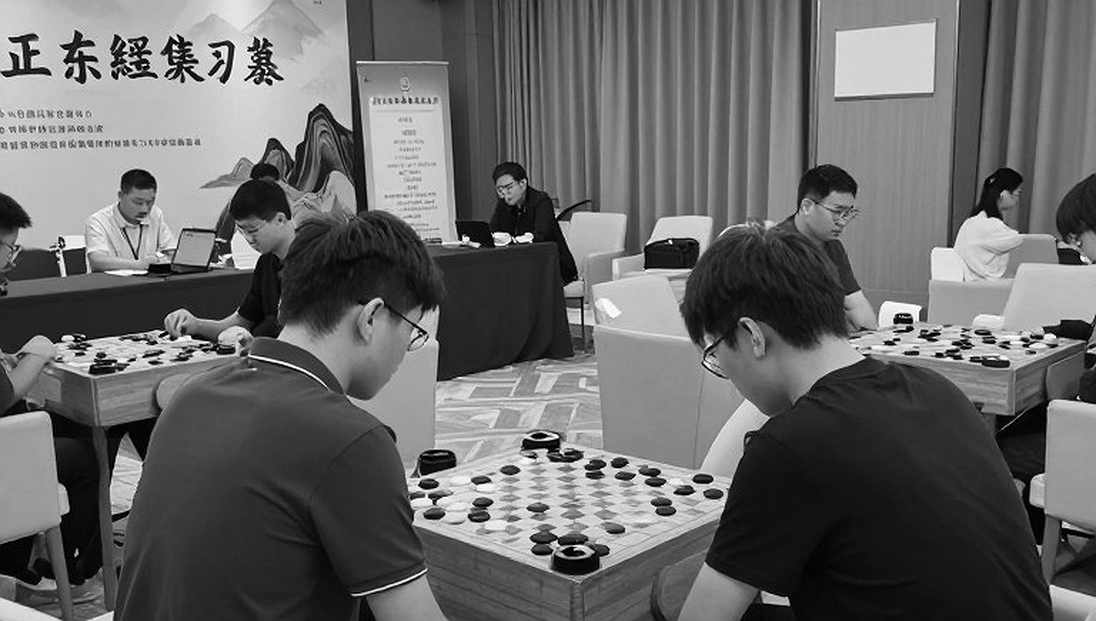
On a Thursday night, at a small chess club on the fourth floor of a commercial building in Shanghai, a three-minute blitz game between two 1700-rated players ended on move twenty-two. Black's second move was d5: a pawn lunging into the centre while leaving its neighbour inside White's capture range.
White sat still. I counted in my head: forty seconds, more than a fifth of the entire game's time budget, burned on move three. Eighteen moves later White lost, and the loss came from a chain of hesitant decisions placed precisely where they could do damage, not from a brilliant combination.
In my notebook I wrote one line: "2...d5. The opening move that sells surprise." A few days later I read a new ChessBase product page about that very move: a sixty-minute video presented by Andrew Martin, titled around the Elephant Gambit. I read it three times, as my long-standing rule demands: three times before writing, once after, so that data serves as a witness rather than a judge.
The Elephant Gambit is also known as the Queen's Pawn Counter-Gambit and is generally classified in the C40 region of the ECO system. The move sequence is 1.e4 e5 2.Nf3 d5. On move two, Black pushes the pawn to d5 and voluntarily accepts a material deficit if White agrees. This is an irregular king's pawn gambit: not a Ruy Lopez, not a Berlin, not a Petroff, not a Sicilian. It belongs to the old family of ideas that ran ahead of their time, documented since the nineteenth century and never erased from the databases.
There are players the world forgets, but databases never forget them. The same is true of 2...d5: abandoned by fashion, never removed from the archive. That establishes the first standard for any product promoting it. An old move does not automatically become a new move. "Underrated" is an opinion, not a theoretical claim.
The promotional page I read belongs to the "Tips for Beginners" series, part thirty-one, with a title referencing LiveBook and an endgame expert. The information quality of the source must be stated plainly at the outset, because it determines how the rest should be read. Of the seventeen information points the material provides, fifteen are the author's opinion. There is no engine evaluation. No sample games. No rating data. No price. No publication date. The only measurable datum is the runtime: sixty minutes.
The title itself is a signal worth recording. It speaks of the endgame and of LiveBook, while the content being sold is an opening repertoire. For someone who has spent too many years in front of product pages, the mismatch between title and content is a small but telling trace of commercial packaging.
Technically, the decisive test sits on move three. After 1.e4 e5 2.Nf3 d5, White can take with 3.exd5, and that is the most common practical response at club level. Black then has four main directions: 3...e4 in the Paulsen style, 3...Qxd5 recapturing at once, 3...Bd6 developing the bishop, and 3...Nf6 bringing the knight out. Each is a different way of repaying the same loan: one pawn, taken on move two.
Take 3...Qxd5. Black recovers the pawn but pays by developing the queen early. White brings the knight to c3 with tempo and continues with natural development. The typical outcome is a comfortable White position, sometimes clearly better, thanks to development plus a compact structure.
With 3...e4, Black chooses another road: kicking the knight and buying space with the very pawn that was lost. The e4 pawn becomes a spearhead and a target simultaneously. If White handles it accurately, Black's material compensation amounts to a cramped position and an open file White can exploit.
The remaining two, 3...Bd6 and 3...Nf6, are pure development. They do not reclaim the pawn immediately; they generate pressure on the centre and wait for White to err while holding the extra material. Black's entire idea lives inside that word: wait. Wait for White to get greedy, wait for White to develop slowly, wait for the opponent's clock to run. According to the broad consensus of the chess world, when White plays accurately, Black's winning chances are narrow. This is an assessment from outside the source, not a conclusion the source proved.
The real value of the Elephant Gambit lies in psychology and time, not in the position. It sells Black something specific: the right to force the opponent to think on move three. In a blitz game, forty seconds of early thinking is an enormous cost. In a classical game with prior preparation, that cost disappears, and Black is left with one pawn fewer and an unclear position.
This leads to a classification by time control. In blitz and bullet, practical value is highest. In club-level rapid, value remains but begins to depend on whether the opponent knows the line. In classical chess against an opponent who has checked a database, value approaches zero.
A further practical limit deserves stating: the ceiling. Against players above roughly 2200 to 2300 Elo, a gambit that has been fully documented gets handled by memory and engine analysis. Surprise has an expiry date, and that date is far shorter than the lifespan of a mainstream opening.
Here I want to pause, because it bears directly on the product being sold. ChessBase promotes this video alongside the name of one of its own ecosystem features: LiveBook, an online opening-tree reference tool. Yet that same tool allows anyone to look up the statistics of 2...d5 in seconds. The seller of the surprise weapon also sells the detector for surprise weapons. In the era of online databases, the shelf life of an offbeat move is measured in weeks, sometimes days.
The sixty-minute runtime also needs proper placement. A complete Black repertoire for an irregular gambit, treated seriously, requires several hours: model games, transpositional lines, engine analysis, and above all the branches where White declines the invitation. Sixty minutes suffices only to survey representative lines and a handful of traps. It is a survey, not a course.
The most conspicuous missing branch is the most common one at club level: White accepts the pawn and consolidates. The material never addresses what Black should do when White does not fall for the trap, does not grab material, and simply develops. For a product marketed as a weapon, omitting the opponent's most practical reply is not a small gap.
If I were asked to verify this product the way I verify a transfer dossier, I would open three sources: ChessBase's own game database, the opening explorers of the major online platforms, and the weekly international game archive. All three are free and available. The source cites none of them. For a product sold on a promise of score, the absence of cross-checking is a more relevant detail than the move itself.
One sentence in the material stopped me: if used with discretion, the viewer will rack up the points. The phrase "with discretion" functions as a politely placed disclaimer inside promotional prose. It implicitly concedes that the move is not a universal weapon but a rationed one. An opening that only works when restrained has already declared its own limits.
Correlation is not causation. If a statistics table one day shows 2...d5 scoring above average in the 1400 to 1800 band, the cause may be that opponents spent their clock on move three, not that Black's position is better. It took me years to recognise this kind of distortion in my own work.

Here is a twist I want to grant this product, opposite to the usual reflex. A data analyst's first instinct is to check the objective evaluation and declare the item overpriced. But the benchmark has been set in the wrong place. The right question is not whether 2...d5 holds at 2700 level, but whether it makes a 1400 player calculate better, defend more patiently, and understand the value of initiative more clearly. For a learner, a theoretically weak opening that teaches play outside the book can be a strong opening pedagogically.
That is why I read this sixty-minute video as teaching material rather than a weapon. It targets young players and club players, exactly as the promotional text says. For that audience, the success criteria are entirely different: a 1200 to 1800 player learns to handle unbalanced positions, learns the feel of playing a pawn down with sufficient tempo, learns patience when the opponent grabs material. Those skills do not appear in engine evaluation tables, but they exist in real games.
Andrew Martin is an English International Master and a long-standing ChessBase author, and that is a positive signal. But I must note it clearly: the signal is not independent, because the presenter and the seller are the same publisher. In my profession, a non-independent signal is still a signal, only it must be weighed more lightly. Thirty-two years of chess commentary for VTC taught me that personal reputation and product quality are two different curves, sometimes touching, sometimes diverging.
When the stands are empty, the true value of the player starts to speak. No crowd can support a move that concedes material, and no applause saves a pawn already lost. The board is one of the few places where material truth is recorded move by move, beyond argument, beyond reinterpretation once the clock has stopped.
I once trusted emotion, until a number knocked on my door at three in the morning. That night I filtered old blitz games in an archive and realised that the games I remembered as the most beautiful, the most exciting, usually ended in defeat for the side that produced them. My memory curates drama. A statistics table does not. Since that night I keep memory for the closing sentence, and during analysis I force myself to ask one question: if there were only the board and the data, what would I see?
The next-cycle signals sit in three places. First, the frequency curve of 2...d5 across online databases in the 1400 to 2026 band over the next twelve months; if the product sells widely, the curve rises and the surprise value collapses in proportion. Second, the opponent's thinking time on move three, the most practical indicator no advertiser ever measures. Third, whether the publisher adds runtime and game data, since that is the only route from survey to course.
I light candles for data. But I always let the flame of emotion illuminate the question. A pawn on move two was never a gamble on the position. It is a gamble on the time of the person sitting opposite, and time is the only thing in chess that can genuinely be bought.